How to Rank #1 on Google AND Show Up in AI Answers: A Dual-Optimization Strategy
Stop running two strategies. One framework covers ~80% of both channels at once.

SummaryMost teams run two playbooks — one for Google, one for AI search — and double their workload for it. In reality the two channels share roughly 80% of their signals: E-E-A-T, topical authority, technical health, and answer-first structure. This guide gives you one unified six-step framework that wins organic ranking and AI citation together, with off-site entity signals as the real differentiator.
Read moreShow less
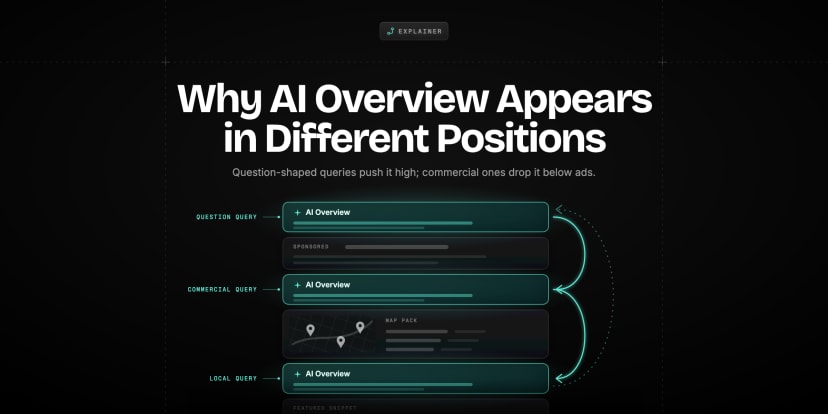
Most marketing teams trying to rank on Google and AI search are running two parallel playbooks. 68% of marketers now treat SEO and AI search optimization as completely separate workflows. That doubles content workload without proof it is working. Meanwhile, AI Overviews now appear in over 57% of all Google search results, up from just 25% a year ago. ChatGPT search and Perplexity are increasingly where research begins. Many marketers do not yet understand how do ChatGPT and Perplexity pick sources, or how much existing SEO work already contributes to it. The pressure to build an AI search visibility strategy on top of an already stretched SEO operation is real.
The frustration is understandable. You optimize a post for organic search, then wonder if it will ever surface in a ChatGPT answer. You try to figure out how ChatGPT and Perplexity pick sources, and it feels like an entirely different discipline. You want to improve AI search visibility but have no clear starting point. Your team is already at capacity, and no one is certain which effort actually moves the needle.
This guide solves exactly that. We break down the shared signals that power both channels, explain where they genuinely diverge, and give you a practical dual SEO strategy you can apply to every piece of content you create. By the end, you will know how to optimize for AI and Google simultaneously without doubling your workload.
Why Do Marketers Think Google and AI Search Need Separate Strategies?

The assumption is understandable on the surface. Google is a link-based ranking system built over decades. AI engines like ChatGPT and Perplexity generate answers by retrieving and synthesizing web content. They feel like different machines, so the instinct is to treat them separately.
The perception in most marketing teams is this: Google rewards keywords and links, while AI rewards trust and entities. That framing is not entirely wrong. But it creates a false divide that leads teams to build two full content workflows where one would do.
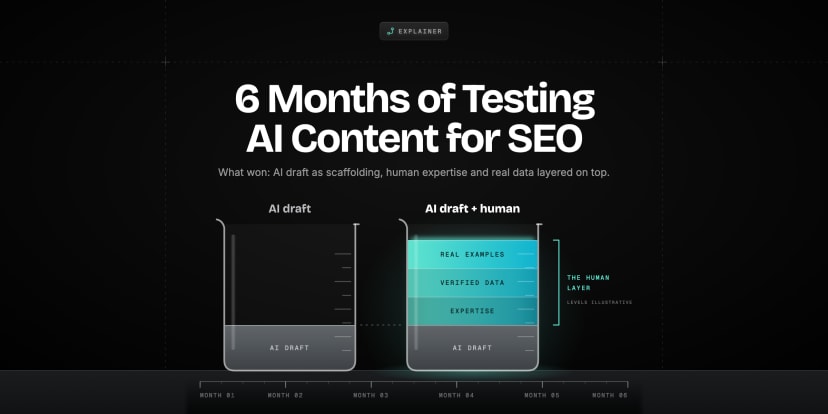
Here is the reality. AI engines, including Google's AI Overviews, retrieve primarily from pages already in the top 10 organic results. Google's own Search documentation confirms that AI-generated answers pull from the same index that powers traditional search. If you are already in the top 10, you are already a candidate for AI citation. A dual SEO strategy is not about running two separate operations. It is about one well-executed strategy with AI-specific layers added on top.
The brands gaining ground in the SEO for AI era are not the ones with the biggest content teams. They are the ones who stopped fragmenting their efforts and started executing a unified approach.
What Is the Shared Foundation for AIO and Organic Ranking?

Content optimization for AI and Google starts in the same place. These four signals serve both channels equally well. Getting them right is the most leveraged investment you can make.
E-E-A-T: Experience, Expertise, Authoritativeness, and Trustworthiness
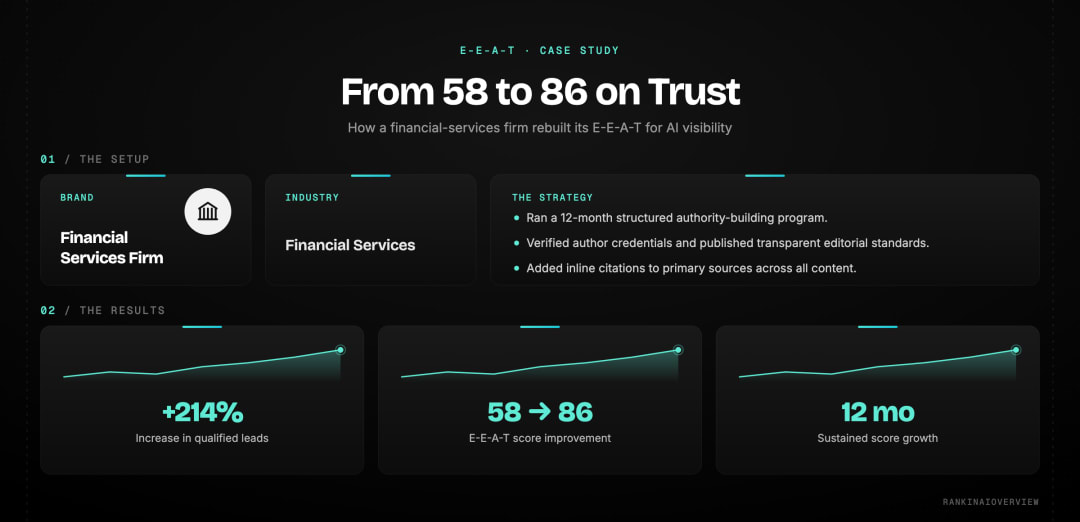
Google's Search Quality Rater Guidelines define E-E-A-T as the primary framework for evaluating content quality. AI engines apply the same signals when deciding what is worth citing. Both systems ask the same question: does this source actually know what it is talking about?
Signals that satisfy both include named authors with real credentials, original proprietary data, inline citations to primary sources, and consistent topical depth over time. A byline from "the editorial team" does far less work than a named expert with a verifiable track record.
Topical Authority
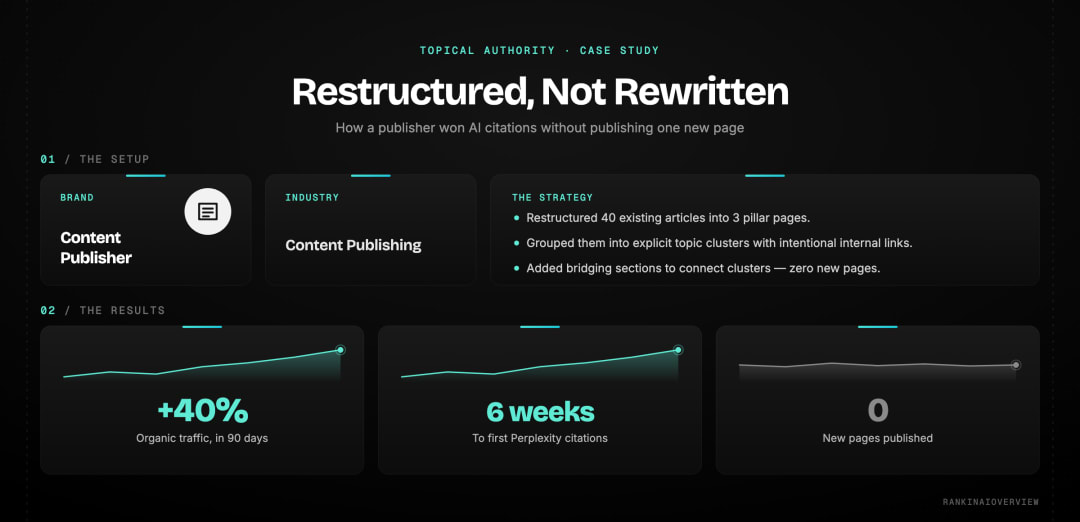
A content cluster covering a topic from every angle signals expertise to Google's algorithm. It signals the same thing to AI retrieval systems. AIO and organic ranking both reward domains that are a reliable reference on a specific subject.
A single optimized post performs weaker than a tightly interlinked cluster. If you write about AI search visibility strategy, your site should also cover GEO, AEO, entity optimization, and how LLMs retrieve content. Each piece reinforces the others and builds the topical authority that both channels reward.
Technical SEO Health
If Google cannot crawl your content, AI engines cannot cite it. This is not a metaphor. Google's crawling and indexing documentation confirms that pages must be indexed before they appear in AI-generated answers. Broken pages, noindex tags, slow load times, and duplicate content damage visibility in both channels equally. Technical health is not optional in the SEO for AI era.
Clear, Structured Content
Short direct answers in opening paragraphs, question-based headings, tables for comparisons, and FAQ sections all make content easy to extract. Schema.org structured data standards show how properly formatted content is more legible to both search engines and AI retrieval systems. Content optimization for AI and Google requires the same structural discipline: answer first, expand second.
Where Do the Strategies Diverge When You Optimize for AI and Google?
There are genuine differences between the two channels. Understanding them lets you layer the right signals on top of your shared foundation without rebuilding everything from scratch.
Signal | Google Priority | AI / LLM Priority |
|---|---|---|
On-page keyword optimization | High | Medium |
Backlink authority | High | Medium |
E-E-A-T signals | High | High |
Schema markup | High | Medium-High |
Answer-first content structure | Medium | Very High |
Off-site entity signals | Low-Medium | High |
Named entity clarity | Medium | High |
AIO and organic ranking overlap | Core | Core |
For Google: On-Page Keyword Signals Still Matter
Title tags, meta descriptions, header keywords, and keyword placement in body copy remain relevant Google ranking signals. They matter less than five years ago, but they still influence how Google classifies a page and which queries it surfaces for. Keyword strategy is not dead in the SEO for AI era. It has just become the floor rather than the ceiling.
For AI: How ChatGPT and Perplexity Pick Sources
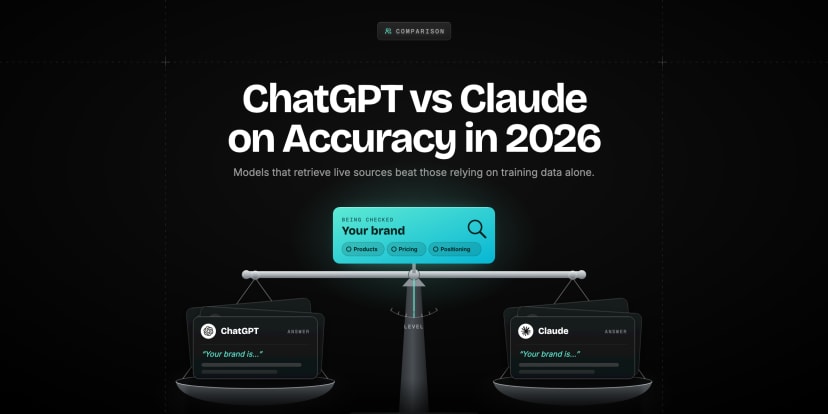
Understanding how do ChatGPT and Perplexity pick sources changes how you think about content structure entirely. Both engines pattern-match for structured, self-contained answers. They look for content that directly addresses the query without requiring surrounding context to make sense. If you are wondering How do ChatGPT and Perplexity pick sources, then let us tell you that they follow authority and structure signals, the same signals that drive organic ranking.
Perplexity's retrieval system, like Google's, indexes and ranks pages before surfacing them. Research from Princeton and Georgia Tech found that AI citation favors pages with clear entity mentions, direct answer formats, and high domain authority. How ChatGPT and Perplexity pick sources is not random. It is structural and authority-driven, which means your existing SEO work counts.
For AI: Off-Site Entity Signals Are the Real Differentiator

This is the gap most SEO playbooks miss entirely. AI engines do not only evaluate what is on your website. They evaluate how often your brand appears in credible external contexts. Mentions on Reddit, Quora answers, G2 reviews, citations in newsletters, and presence on Wikipedia or Wikidata all build entity authority.
When an AI model has encountered your brand repeatedly across trusted sources, it is far more likely to surface your content in a generated answer. This connects directly to how do ChatGPT and Perplexity pick sources: external trust signals shape retrieval as much as page structure does. Building off-site presence is how to improve AI search visibility beyond what on-page changes alone can achieve.
What Does a Unified Dual SEO Strategy Actually Look Like?

Here is the six-step framework for content optimization for AI and Google in one workflow. Apply this to every piece you create and you eliminate the need for two separate strategies entirely.
Step 1: Research Search Intent Before Everything
Before writing, understand the primary intent behind the query. Is the user trying to learn, compare options, or make a decision? This shapes keyword targeting for Google and answer structure for AI.
Use Google's People Also Ask boxes, Reddit threads, and Quora questions to find the exact language real users use. These are the same conversational phrases that AI search visibility strategy relies on for retrieval matching.
Step 2: Build Topic Clusters, Not Single Posts
Map the full topic before writing a single post. What adjacent questions should your site own? Which articles can interlink? Which angles is your content library missing?
A cluster approach is the backbone of any effective dual SEO strategy. It signals topical authority to Google and creates the dense entity coverage that AI engines use to classify your domain. One post alone rarely achieves either at scale.
Step 3: Write Answer-First, Every Time
Answer the primary query in your first 100 to 150 words. No warmup. No backstory. Lead with the direct answer, then expand with context, data, and examples.
This is the highest-leverage structural change available for how to improve AI search visibility. It also directly improves Featured Snippet capture on Google. One format change, two measurable wins. It is the core principle when you optimize for AI and Google done right. Every team serious about the SEO for AI era should make this change first.
Step 4: Implement Schema Markup Systematically
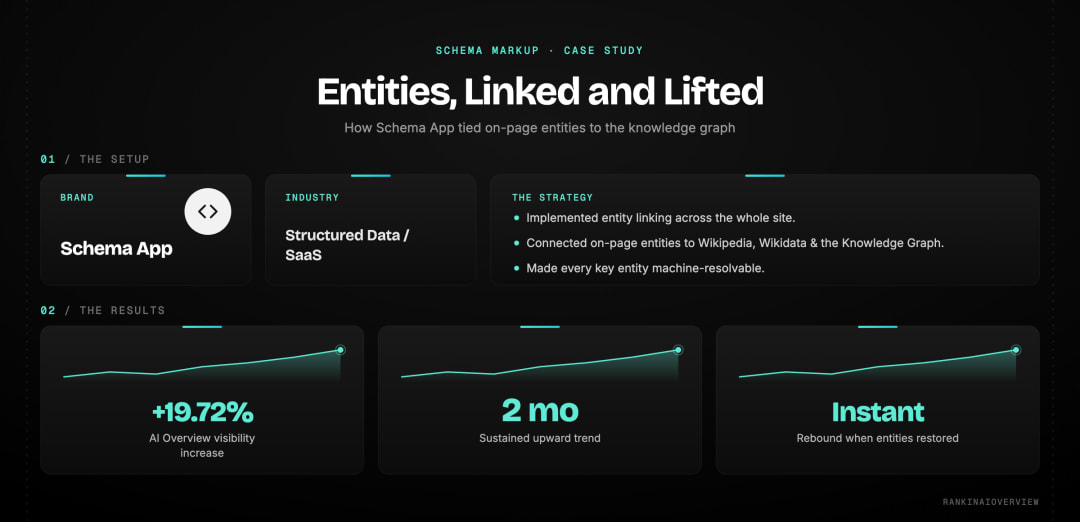
Add Article and FAQPage schema to every long-form post at minimum. For guide content, add HowTo. Schema.org's FAQPage specification shows how to structure question-and-answer content so it is parseable by both Google and AI retrieval systems. Pages with schema consistently outperform pages without it in AIO and organic ranking results.
Step 5: Distribute Condensed Insights Off-Site
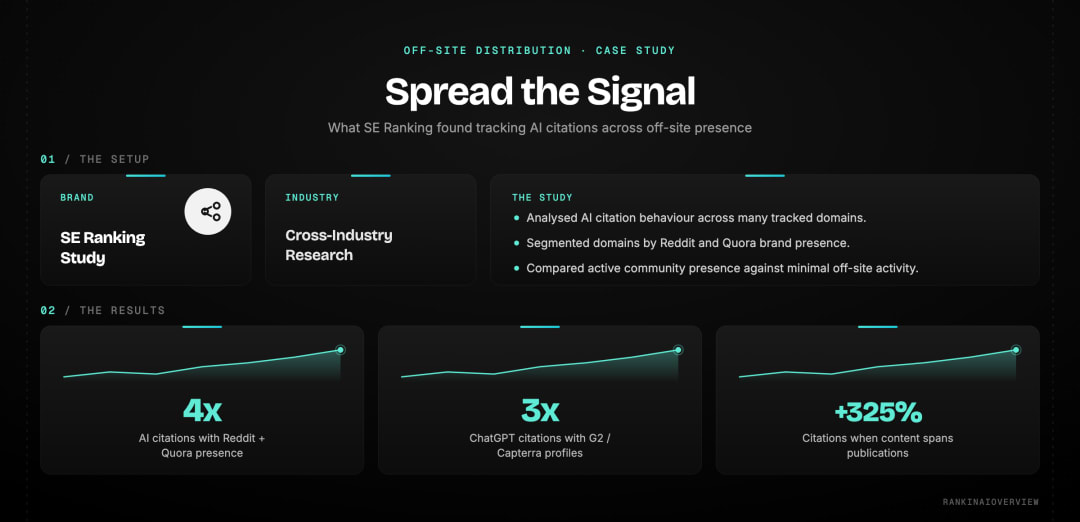
Publish shortened versions of your key findings in communities where your audience is already asking questions. Answer Reddit threads. Post takeaways on LinkedIn. Respond to Quora questions with clear, direct answers that link back to the full piece.
This is not optional for AI search visibility strategy. Off-site signals are how AI engines validate that a brand is genuinely authoritative on a topic. If you are trying to figure out how to improve AI search visibility beyond what on-page work can do, this is the lever. How to appear in ChatGPT search answers is partly answered by whether ChatGPT has encountered your brand in trusted external contexts during training and retrieval.
Step 6: Build Entity Presence Across Platforms
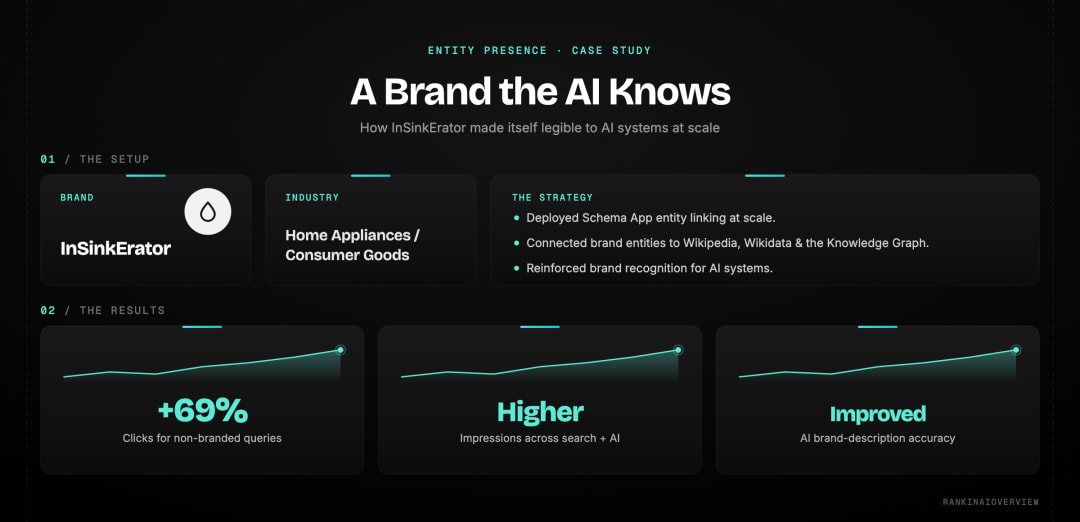
Get your brand into credible external references. Pursue inclusion in industry roundups. Claim and optimize your Google Business Profile and Knowledge Panel. Seek Wikipedia mentions and Wikidata entries where relevant. Google's structured data documentation confirms that entity understanding is central to how its AI systems evaluate content credibility. This is the long game, and it is the most reliable answer to how to appear in ChatGPT search answers over time.
How Do You Prioritize This Strategy When Resources Are Limited?
Not every team can execute all six steps immediately. Here is the right order for teams working within real constraints.
Start with technical health and content quality. A well-structured, E-E-A-T-rich article on a fast, crawlable site is the foundation. No amount of off-site work compensates for weak on-site content when you want to rank on Google and AI search simultaneously.
Next, add schema markup and FAQ sections. These create immediate opportunities in both Google Snippets and AI retrieval. They are low effort relative to the payoff and should precede any significant off-site investment.
Once your on-site foundation is solid, invest in off-site entity signals. This is where AI search visibility strategy separates from traditional SEO. It is also one of the most underrated answers to how to improve AI search visibility without publishing more content. Even consistent community participation, 30 to 60 minutes a week, builds meaningful signal over months.
The core principle of any dual SEO strategy: organic ranking is the prerequisite, AI citation is the multiplier. AIO and organic ranking go together, you cannot reliably win one without the other as a base.
Which Tools Support a Dual Optimization Approach?
Executing content optimization for AI and Google within one workflow is easier when your tools stack reflects both channels. Here is what a practical stack looks like.
Tool | Primary Use | Channel Served |
|---|---|---|
Ahrefs | Keyword research, backlink analysis, content gaps | Google + AI shared foundation |
Semrush | On-page optimization, site audits, competitor tracking | Google content optimization |
Surfer SEO | NLP-based content scoring, entity coverage | On-page keyword depth |
Google Search Console | Organic health monitoring, indexing status | Google baseline |
ChatGPT | Manual testing of AI citation and brand visibility | AI search auditing |
Perplexity | Real-time testing of how ChatGPT and Perplexity pick sources | AI search auditing |
Most teams use Ahrefs or Semrush for the Google side and Surfer SEO for entity coverage. Manual testing in ChatGPT and Perplexity fills the gap for AI visibility auditing. For deeper research into how AI engines perceive brand authority and what drives AI citation, RANK IN AI OVERVIEW covers these topics in detail across its content library.
Conclusion
You do not need two strategies to rank on Google and AI search. You need one well-executed strategy with the right layers. Build topical authority through content clusters. Structure every piece for direct-answer extraction, that is also how to appear in ChatGPT search answers consistently. Maintain technical health across your site. Add schema markup systematically. And invest in off-site entity presence through communities where your audience already spends time.
That single dual SEO strategy covers the shared 80% of signals between Google and AI. Content optimization for AI and Google is not two jobs. When you optimize for AI and Google together, it is one job done with more intention around structure, entity clarity, and off-site presence.
The SEO for AI era rewards the brands that execute a unified AI search visibility strategy consistently, not the ones running the most parallel playbooks. Focus the work, improve AI search visibility over time, and let AIO and organic ranking grow together.
Frequently asked questions
How much overlap is there between Google and AI search ranking factors?+
Around 80% of signals that help you rank on Google also improve AI citation. The main divergence is off-site entity signals, which matter more for AI search visibility strategy, and exact-match keyword placement, which matters more for organic ranking.
How long does it take to improve AI search visibility after making these changes?+
Structural changes like answer-first formatting and schema markup show results within four to eight weeks. Off-site entity signal building is longer-term. Most teams looking for how to improve AI search visibility at scale should expect three to six months before measurable citation improvements appear across ChatGPT and Perplexity consistently.
Can a brand-new site rank on Google and AI search at the same time?+
It is very difficult to do simultaneously from scratch. AIO and organic ranking both require existing domain authority. The practical approach is building organic ranking first, then layering AI-specific signals. There are no shortcuts that bypass the foundational SEO work in the SEO for AI era.
How do ChatGPT and Perplexity pick sources for their answers?+
Both engines favor pages with high organic authority, clear entity mentions, direct-answer structure, and crawlable technical health. [Research from Princeton](https://arxiv.org/abs/2402.01383) confirms that how ChatGPT and Perplexity pick sources is driven by authority and structure, not by any special AI-only submission process. Traditional SEO quality signals are the foundation.
What is the easiest first step toward content optimization for AI and Google?+
Add a FAQ section to your five highest-traffic articles. It creates FAQPage schema opportunities, improves Featured Snippet capture on Google, and directly satisfies the question-format queries that AI engines retrieve most often. It is the fastest on-ramp to content optimization for AI and Google in one move.
How do I appear in ChatGPT search answers without starting over?+
You likely do not need to start over. Audit your existing top-performing pages for answer-first structure, schema markup, and off-site entity signals. Improving these three areas on pages already ranking is the most efficient path to how to appear in ChatGPT search answers without rebuilding your content from scratch. How to appear in ChatGPT search answers is ultimately about being findable and extractable, two things strong SEO already creates.
Explore with AI
Share this