Which Metrics Show Where Your Content Is Cited in AI Answers
Per-prompt citation data shows exactly which prompts, pages and engines cite you. Here is how to read it and act on the gaps quickly.
Key Highlights
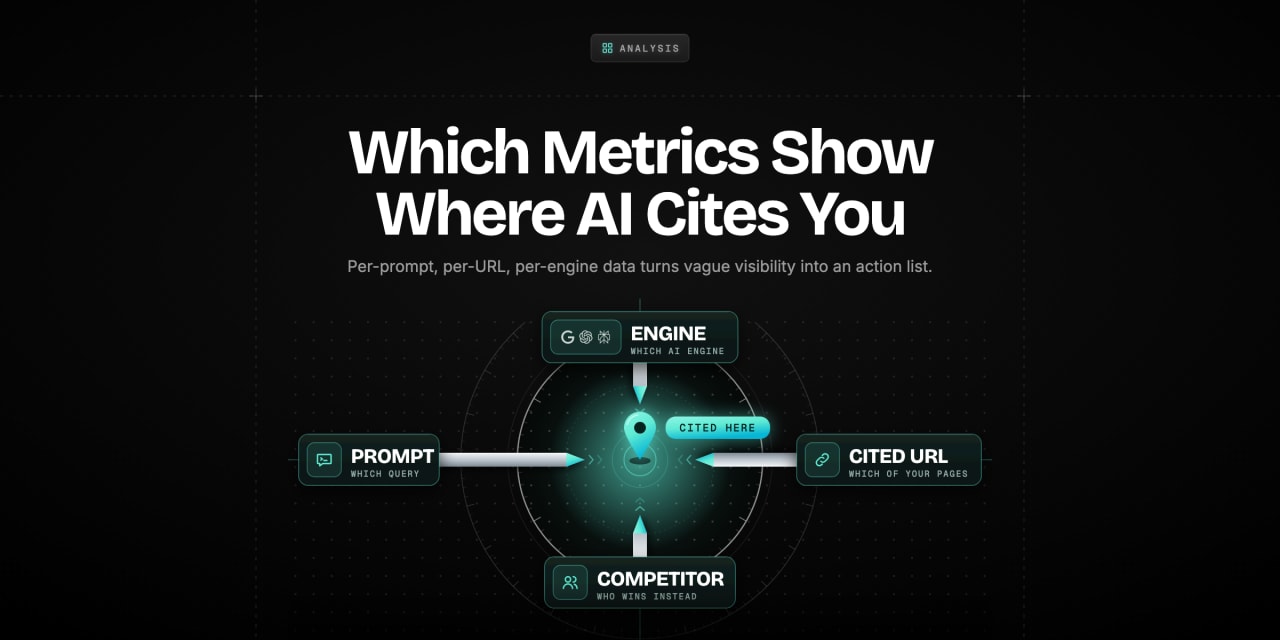
- The metrics that show where you are cited are per-prompt citation data, cited-URL data, engine breakdown, and competitor comparison.
- Together they pinpoint exactly which prompts, pages, and engines cite you, turning vague visibility into a specific action list.
- Fast action means fixing the highest-intent gaps first: sharpen the answer, structure, and trust on prompts where you are missing or losing.
Knowing that you have "some AI visibility" is useless. What you need is precise: which prompts cite you, which pages of yours get pulled in, on which engines, and where competitors beat you. Those specifics are what let you act quickly instead of guessing. Vague visibility scores do not tell you what to do on Monday, but per-prompt data does.
Speed matters here because AI search moves fast and opportunities are perishable. A prompt where you are absent today is a gap a competitor may fill tomorrow. The teams that win treat AI visibility data as an action queue, not a report to admire, and that operational habit is what separates them from teams that monitor endlessly and change nothing.
This guide covers the metrics that show where you are cited and how to act on them quickly. It explains which metrics pinpoint your citations, how to read them for action, how to prioritize fast wins, and how to close the loop. For the diagnostic side, our AI citation fix diagnostic walks through the process in detail.
Which Metrics Show Where You Are Being Cited?
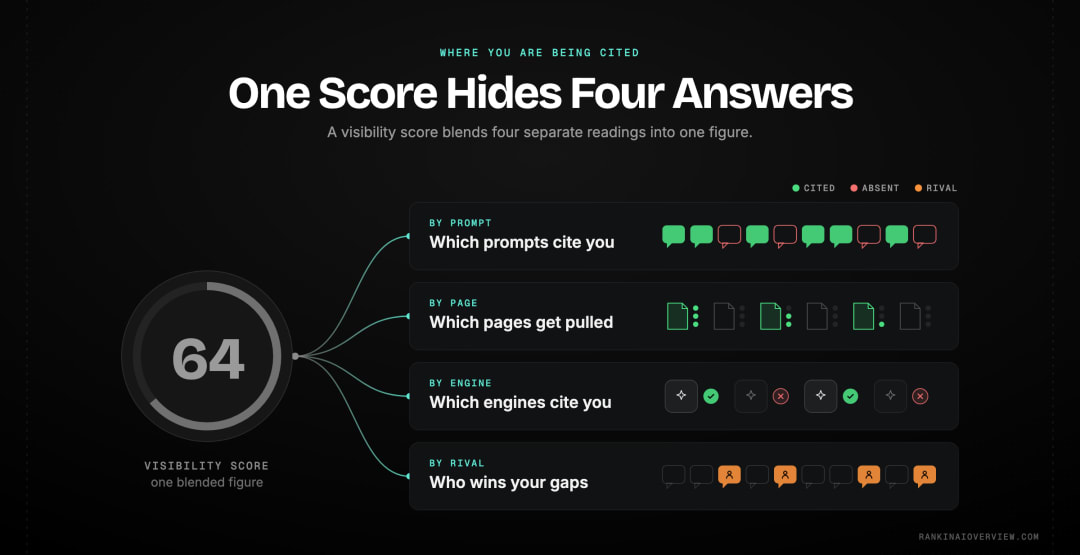
The metrics that show where you are cited are per-prompt citation data, the specific URLs cited, the engine breakdown, and competitor citations for the same prompts. Together they reveal exactly which queries, pages, and engines cite you, and where you are absent or losing.
The metrics that pinpoint your citations:
- Per-prompt citation data: which specific prompts cite you
- Cited-URL data: which of your pages get pulled into answers
- Engine breakdown: which engines cite you and which do not
- Competitor citations: who wins the prompts where you are absent
These are far more actionable than an aggregate score. A single visibility number tells you nothing about what to change. Per-prompt, per-URL, per-engine data tells you exactly where to aim, which is the difference between a report and an action list, as our guide to AI visibility metrics reinforces.
How Do You Read These Metrics for Action?
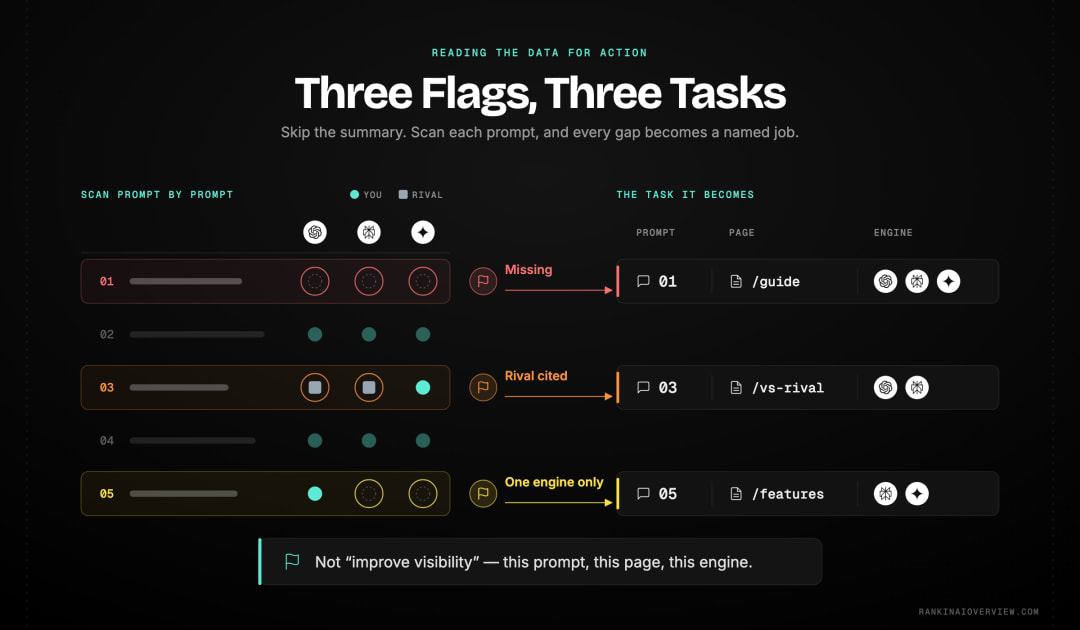
Read these metrics for action by scanning for prompts where you are absent or losing share, and noting which pages and engines are involved. Each gap becomes a specific task: improve a particular page for a particular query on a particular engine.
The reading process is a hunt for gaps. Go prompt by prompt and flag three things: where you are missing entirely, where a competitor cites over you, and where you appear on one engine but not others. Each flag is a concrete task, not a vague goal, which is what makes the data operational.
Attach the specifics. Knowing the exact prompt, the page that should win it, and the engine involved turns "improve AI visibility" into "rewrite this page's answer for this query." That precision is what enables fast action. To generate this per-prompt view automatically, Rank in AI Overview offers a free AI-visibility audit.
How Do You Prioritise Quick Wins?

Prioritize quick wins by tackling high-intent prompts where you are close to being cited or recently lost share, using fast structural fixes first. Focus on buyer-intent queries and changes like leading with the answer, since these deliver the most value in the least time.
A fast-win prioritization approach:
- First: high-intent prompts where you are absent but your content is strong
- Then: prompts where a competitor recently overtook you
- Use fast fixes first: direct answers, clear structure, schema
- Defer slow trust-building for prompts that need it, but start it in parallel
The logic is impact over effort. A structural fix on a high-intent prompt where you nearly qualify can flip you into the answer quickly. That beats slow, broad work with no clear target, so chase the gaps that are both valuable and close to won.
Prioritizing this way also builds momentum. Early citation wins on important prompts make the case for continued investment and keep the team focused on the queries that actually drive revenue, rather than scattering effort across low-value ones.
How Do You Close the Loop Quickly?
Close the loop by making the fix, waiting for recrawling, then re-checking the same prompt to confirm you now appear. Track the change so you can attribute it, and move to the next gap. Fast iteration, measure, fix, re-measure, is what compounds AI visibility gains.
Speed comes from tight cycles. Make a focused change on a specific prompt, re-check it after recrawling, and confirm the result. A short loop lets you work through many gaps quickly rather than making sweeping changes and hoping, which is slower and harder to learn from.
Keep a running action queue. As you close gaps and find new ones, the queue stays full of specific, prioritized tasks. That operational rhythm, driven by per-prompt data, is how teams act quickly and keep improving instead of stalling on vague reports, and it pairs with choosing a tool from our best AI rank trackers roundup that surfaces per-prompt data.
Conclusion
Knowing where you are cited, not just whether you are cited, is what enables fast action. Per-prompt citation data, cited URLs, engine breakdowns, and competitor comparisons pinpoint exactly which queries, pages, and engines to work on. That precision turns AI visibility from a report into an action queue.
Act quickly by hunting for gaps, prioritizing high-intent prompts where a fast fix can flip you into the answer, and closing tight measure-fix-remeasure loops. Keep the queue full and the cycles short. That operational rhythm, powered by the right metrics, is how teams turn AI visibility data into steady, compounding gains.
Want a per-prompt view of exactly where you are cited and where to act? Run a free AI-visibility audit with Rank in AI Overview and get your action list.
Frequently asked questions
Which metrics show where my content is cited in AI answers?+
Per-prompt citation data, the specific URLs cited, the engine breakdown, and competitor citations for the same prompts. Together they reveal exactly which queries, pages, and engines cite you, and where you are absent.
How do I act quickly on AI citation data?+
Scan for prompts where you are absent or losing share, note the pages and engines involved, and fix the highest-intent gaps first with fast structural changes. Then re-check to confirm the change and move to the next gap.
What should I fix first for AI citations?+
High-intent prompts where you are absent but your content is strong, and prompts where a competitor recently overtook you. Use fast fixes like leading with the answer and improving structure before slower trust-building work.
How do I know a citation fix worked?+
Re-check the same prompt after your page is recrawled and confirm you now appear in the cited sources. Track the change to attribute it, then move to the next gap in your action queue.
Why are per-prompt metrics better than a visibility score?+
A single score tells you nothing about what to change. Per-prompt, per-URL, per-engine data pinpoints exactly which queries, pages, and engines to fix, turning vague visibility into a specific, prioritized action list.
How do I keep improving AI visibility over time?+
Maintain a running action queue of prompt-level gaps, work the highest-value ones first, and close each with a measure-fix-remeasure loop. As you resolve gaps and find new ones, the queue keeps your improvement continuous.
Explore with AI
Share this