Perplexity vs ChatGPT: Which One Should You Actually Use in 2026?
Perplexity vs ChatGPT compared on research, accuracy, writing, search and price, with our own test of the sources each one shows. See which suits you.
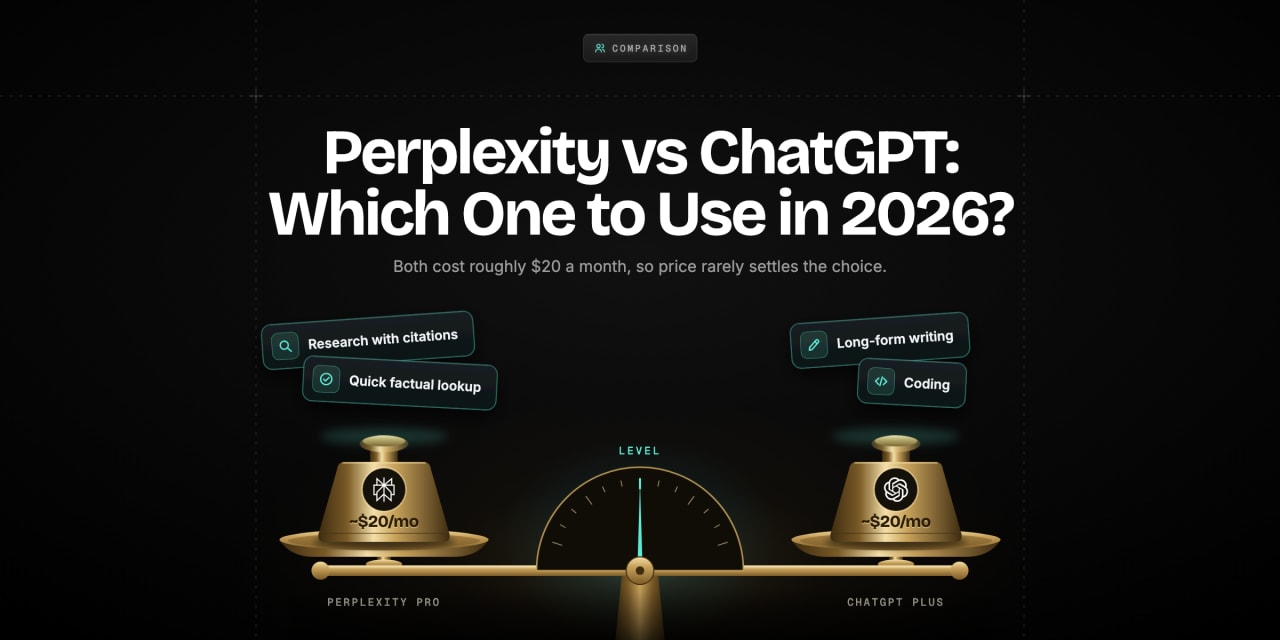
SummaryPerplexity listed 12.3 sources per answer in our test against ChatGPT's 5.9, and the two rarely agreed on the top pick. Perplexity suits sourced research; ChatGPT suits writing and broader work.
Read moreShow less
Key Highlights
- Perplexity is a search engine that answers in prose. ChatGPT is an assistant that can also search. That one difference explains most of the gap.
- For research, fact-finding and anything you need to check, Perplexity is usually the faster route because every answer shows its sources.
- For writing, brainstorming, coding and making things, ChatGPT is the stronger all-rounder.
- Both have a free tier and a paid plan at roughly $20 a month, so price rarely settles the choice.
- In our own test of the same 10 everyday questions, Perplexity listed 12.3 sources per answer and ChatGPT showed 5.9 citations. Across 30 questions, Perplexity pulled from 238 different websites.
- The two engines cite almost completely different web pages for the same question, which matters if you're a brand trying to show up in both.
- Most heavy users don't choose. They research in one and create in the other.
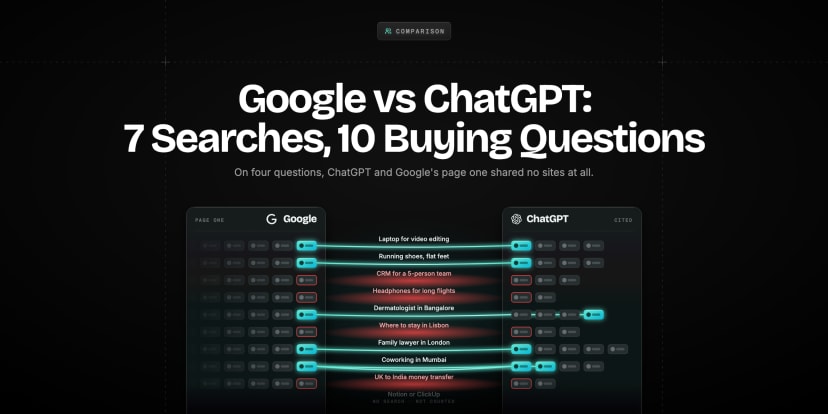
Here's the thing about the Perplexity vs ChatGPT question: the two tools look alike and behave very differently. According to a September 2026 audit of citations across four AI engines by Benjamin Tannenbaum, 96.4% of the cited URLs appeared in only one engine. Most engine pairs shared no cited page at all. Ask Perplexity and ChatGPT the same thing and you're often reading two different slices of the web.
That's why "which is better" gets so many confident, contradictory answers. One person swears by Perplexity because it shows its working. Another can't see why anyone would leave ChatGPT, which writes, codes, draws and remembers their projects. They're both right, because they're judging different jobs. You end up paying for two subscriptions, or worse, using the wrong tool and wondering why the answer feels off.
So this guide doesn't crown a winner. It puts Perplexity and ChatGPT side by side on the things you actually do: research, accuracy, writing, search, pricing and privacy. We didn't stop at reading other people's reviews, either. On 29 October 2026 we asked both tools the same everyday questions ourselves, and you'll see exactly what came back. By the end you'll know which one to open first for each kind of task, and when it's worth keeping both.
Perplexity vs ChatGPT: Which One Wins for Each Task?
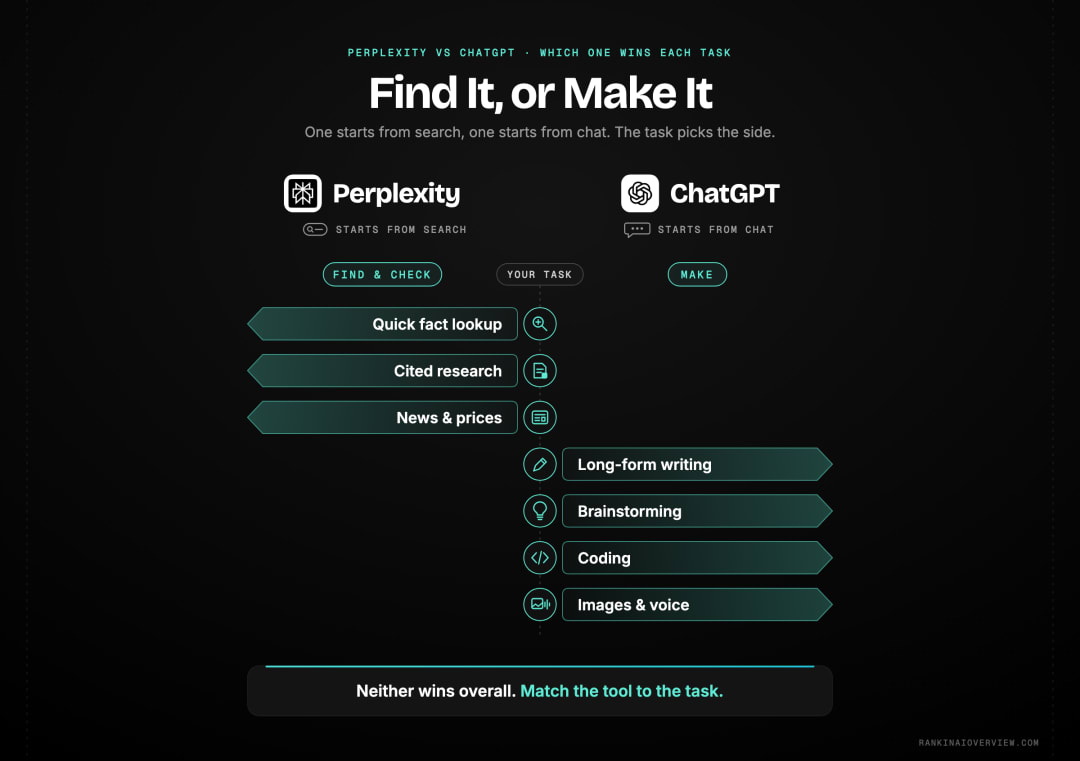
Perplexity wins when the job is finding and checking facts. ChatGPT wins when the job is making something: a draft, a plan, some code or an image. Neither one is better overall. The quickest way to choose is to look at the tasks you do most each week and match them below.
Here's how they stack up across common tasks. Treat it as a starting point, then test on your own work.
| Task | Perplexity | ChatGPT | Lean |
|---|---|---|---|
| Quick factual lookup | Sourced answer in seconds | Good, sources shown when it searches | Perplexity |
| Research with citations | Built around it | Capable, less central | Perplexity |
| Current news and prices | Searches by default | Searches when needed | Perplexity |
| Long-form writing | Serviceable | Strong and flexible | ChatGPT |
| Brainstorming ideas | Narrower, grounded | Wide-ranging | ChatGPT |
| Coding | Fine for lookups | Strong for building | ChatGPT |
| Images and voice | Limited | Broad built-in tools | ChatGPT |
| Remembering your projects | Spaces and threads | Memory and projects | ChatGPT |
What Is the Real Difference Between Perplexity and ChatGPT?
Perplexity is an answer engine: it searches the web for every question, then writes a summary with numbered citations. ChatGPT is a general assistant built on OpenAI's models. It answers from what it learned in training and searches the web when the question needs fresh facts. One starts from search. The other starts from conversation.
Where does each one get its answers?
Perplexity treats your question as a search query first. It pulls pages, reads them, and writes an answer that points back to each one. You'll see the little numbered sources inline, and you can click straight through.
ChatGPT works the other way round. It answers from its own training by default and reaches for the web when your question is about something recent, local or fast-moving. When it does search, it shows its sources too. But a lot of what it tells you comes from the model itself, with no link attached.
Why does that one difference matter so much?
It changes what you can trust at a glance. With Perplexity, the evidence sits right next to the claim, so checking takes seconds. With ChatGPT, an unsourced answer can be spot on or quietly wrong, and you won't know until you look it up.
It also changes what each tool is good at. Grounding everything in search makes Perplexity steady on facts but less adventurous. Leaning on the model makes ChatGPT far better at writing, reasoning out loud and making new things, where there's no page to cite anyway.
Who's behind each tool?
Perplexity is the product of Perplexity AI, a company founded in 2022 that built its whole brand around cited answers. ChatGPT comes from OpenAI and launched in November 2022, which gave it a huge head start on users and integrations. That scale is why ChatGPT has become the default word for "AI chatbot", while Perplexity is known as the research one.
Which Is Better for Research and Fact-Checking?
For research, Perplexity usually wins. Every answer arrives with its sources attached, it searches by default, and its Pro Search and Deep Research modes dig through many pages before answering. ChatGPT can research well too, especially with its own deep research mode, but citations are a feature you switch on there, not the whole point.
How do the deep research modes compare?
Both tools now offer a slower, deeper mode that runs many searches and returns a long report. Perplexity's version reads like a well-referenced briefing, with sources stacked up so you can audit them. ChatGPT's version tends to be longer and more analytical, and it's good at pulling scattered material into a structured argument.
If you need something you can hand to a colleague with references, Perplexity's output is easier to check. If you need someone to think through a messy problem with you, ChatGPT's report often goes further.
Which handles breaking news and live facts better?
Perplexity, mostly because it never forgets to search. Ask about yesterday's product launch, today's exchange rate or the opening hours of a café, and it goes straight to the web. ChatGPT searches for these too, but now and then it answers from older training data when a quick search would have been better. If the fact is time-sensitive, start in Perplexity.
Can you control which sources it uses?
Perplexity gives you more say here. Its focus options let you steer a search towards particular kinds of sources, such as academic papers or discussion threads. Spaces let you pin your own files alongside web results. In ChatGPT, you shape sources mostly by how you word the prompt, or by uploading documents directly.
Also read: why AI engines cite pages that don't rank on Google
Which One Gives More Accurate Answers?
Neither is accurate enough to trust blindly. Perplexity is easier to verify because its sources are always visible. ChatGPT can sound equally sure whether it's right or wrong, so the risk sits in the claims that come without a link. In practice, Perplexity makes mistakes more visible, not rarer.
Does a citation mean the answer is right?
No, and this catches a lot of people out. A citation shows where the tool looked, not that the page actually says what the answer claims. Perplexity sometimes summarises a source loosely or blends two sources into one neat sentence. Click through on anything that matters, especially numbers, dates and quotes.
Where does ChatGPT tend to slip?
Its weak spots are confident detail with no source behind it. Think precise figures, niche facts, recent changes and references to papers or articles. Ask it to search, or to show where a claim comes from, and its accuracy on facts improves a lot. On reasoning, explaining and drafting, the risk is lower because there's less of a single "right fact" to miss.
What's the safest way to use both?
Use the source trail as your safety net. Let Perplexity find and cite the facts, then open the two or three sources that carry the key claims. If you're working in ChatGPT, ask it to search and cite before you rely on a number. Either way, the habit that protects you is checking the source, not choosing the "right" tool.
"These results do not invalidate engine-free page scoring; they identify its estimand." Benjamin Tannenbaum, author of the cross-engine citation audit. Source: arXiv
In plain words, a page can be excellent and still get picked by one engine and skipped by another. Quality and visibility in a given engine aren't the same measurement.
Which Is Better for Writing, Brainstorming and Creative Work?
ChatGPT is clearly better for making things. It writes with more range, adapts its tone on request, brainstorms widely and handles long drafts without drifting. Perplexity can write, but its search-first design keeps it close to its sources. That suits summaries and briefs more than original copy, stories or campaign ideas.
Why does Perplexity feel flatter when it writes?
Because it's trying to stay faithful to the pages it found. That's a strength for a research summary and a weakness for a sales email or a blog intro. Ask it for ten headline ideas and you'll often get ten safe variations on what's already published.
Where does ChatGPT pull ahead?
ChatGPT takes a rough brief and runs with it. It'll draft, rewrite in a different voice, cut to a word limit, turn notes into a script and argue the other side when you ask. Its Canvas-style editing, memory and custom GPTs mean it can learn your preferences across sessions. For marketers, writers and founders producing content daily, that flexibility saves real time.
What about coding?
ChatGPT is the better building partner. It writes, explains and debugs code across many languages and holds a longer back-and-forth about a project. Perplexity is handy for one narrow coding job: looking up current documentation or an error message and seeing which sources say what. Many developers use it as a search box and ChatGPT as the workbench.
How Do Perplexity and ChatGPT Search the Web Differently?
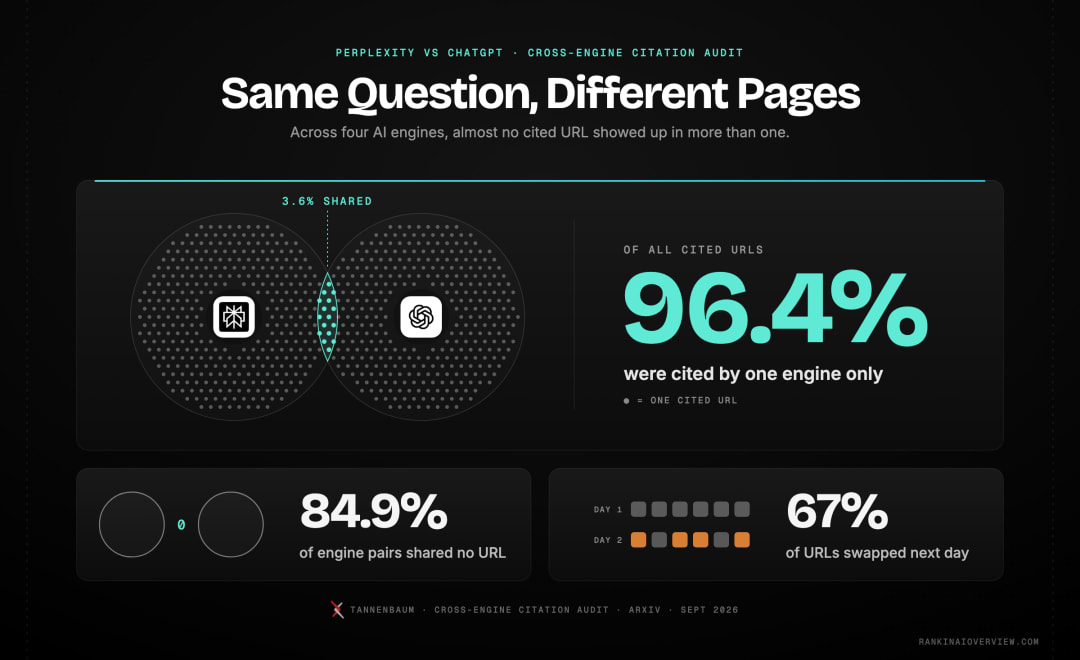
Perplexity searches for almost every question and builds the answer from what it finds. ChatGPT decides for itself when a question needs the web. They also reach different pages. The cross-engine audit found most engine pairs shared no cited URL. Even one engine's citations churned heavily from day to day.
Do they pull from the same pages?
Rarely. The same audit found that 84.9% of engine pairs shared no cited URL across its fixed commercial prompts. So a page that Perplexity leans on for a question may never appear in ChatGPT's answer, and the reverse. For you as a reader, that's a reason to cross-check important answers in both. For a business, it's a much bigger deal, which we'll come to below.
Why do answers change from one day to the next?
Both engines fetch live results, and the web moves. The audit recorded 67% turnover in one engine's cited URLs between two consecutive days on identical prompts. So if you ask the same question tomorrow, you may get different sources and a slightly different answer. Don't treat a single response as the final word on anything that matters.
Which one shows its sources more clearly?
Perplexity. Sources sit at the top of the answer and as numbered markers in the text, so you see what it read before you even start. ChatGPT shows a sources panel and inline links when it searches, which is clear enough. But plenty of its answers don't involve a search at all. If you want to see the evidence every time, Perplexity's layout is built for exactly that.
What Happened When We Asked Both the Same Questions?
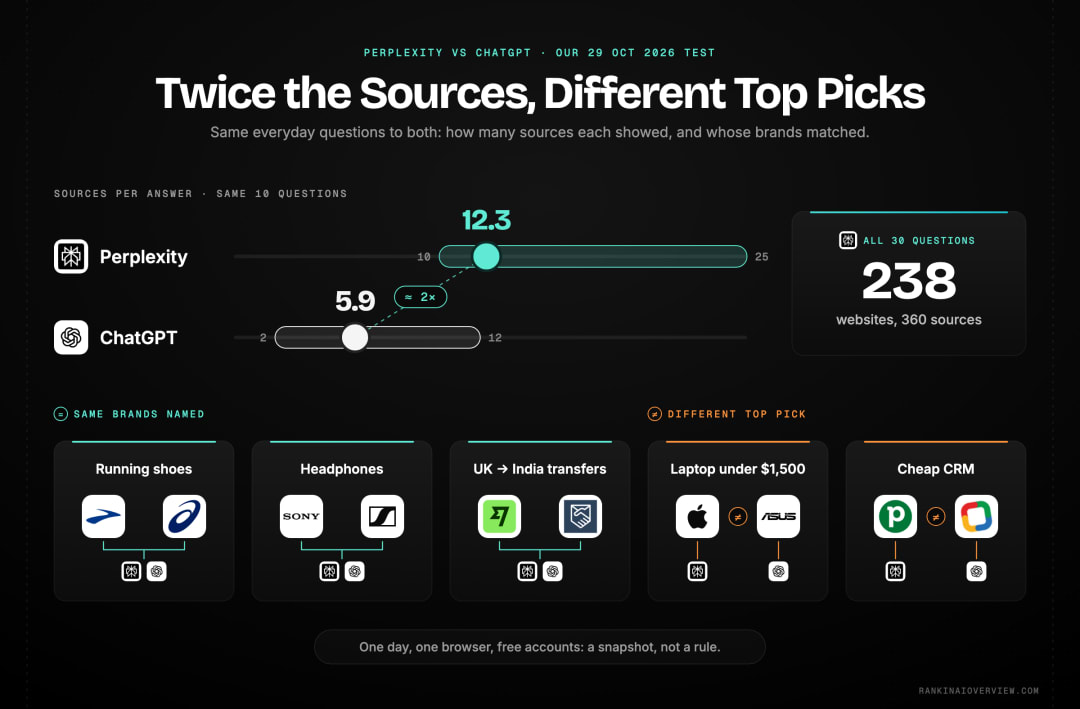
We asked Perplexity and ChatGPT the same 10 everyday questions on 29 October 2026, the first third of our 30-question citation study, typed the way real people type them. Perplexity listed 12.3 sources per answer on average. ChatGPT showed 5.9 citations. Both often landed on the same well-known brands, but they rarely agreed on the top pick.
How did we run the test?
We wrote 30 questions across six everyday jobs: buying something, finding a local service, catching up on news, checking a fact, marketing questions and "is this brand any good?". We typed them like a normal user would, for example "best running shoes for flat feet? my knees hurt after a 5k". Then we ran them in the regular web apps on free accounts, from one browser, on one day. Perplexity got all 30. ChatGPT got the first 10.
How many sources did each one show?
| Measure (same 10 questions) | Perplexity | ChatGPT |
|---|---|---|
| Sources or citations shown per answer | 12.3 on average | 5.9 on average |
| Lowest and highest | 10 to 25 | 2 to 12 |
| Typical answer length | About 400 words | About 500 words |
Perplexity's list is always there, at the top of the answer. ChatGPT's citations show up as small source tags inside the text, and on two questions it showed just two. So if seeing the evidence matters to you, the gap is real, not just a design choice.
Did they recommend the same brands?
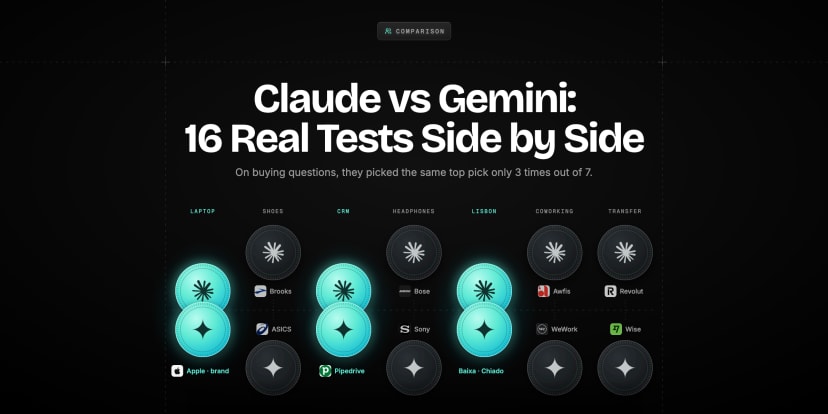
Often, yes, at least for big categories. For running shoes, both named the Brooks Adrenaline GTS 25 and the ASICS Gel-Kayano. For noise cancelling headphones, both named Sony and the Sennheiser Momentum 4. For sending money from the UK to India, both pointed to Wise and Remitly.
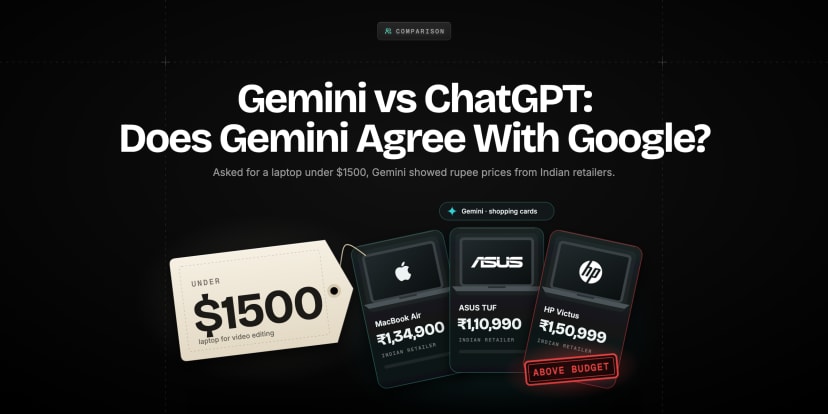
But the top pick moved. For a video editing laptop under $1,500, ChatGPT led with an ASUS ProArt P16 and Perplexity led with a MacBook Air 15. For a cheap CRM for a five-person team, ChatGPT led with Zoho CRM and Perplexity led with Pipedrive. Same question, different first answer.
What did Perplexity lean on across all 30 questions?
Perplexity cited 360 sources from 238 different websites. Live news questions pulled the most, about 19 sources each. Rule and number questions went to official sources: for "can I claim home office expenses as a freelancer in the UK", 7 of its 10 sources were gov.uk. And for "is Airtable good for project management", all 10 sources were airtable.com itself. Reddit, LinkedIn and YouTube together made up just 5 of the 360 citations.
How much should you read into a small test?
Treat it as a snapshot, not a rule. It was one day, one browser and free accounts, and AI answers shift from run to run. Ten shared questions show patterns, not percentages you can bank on. Still, it lines up with the bigger audits: the two tools see different slices of the web, and Perplexity shows its sources far more often.
How Much Do Perplexity and ChatGPT Cost?
Both start free, and both charge roughly $20 a month for their main paid plan. ChatGPT also has a cheaper Go plan at $8. The bigger gaps appear at the top end, where each offers a premium tier for heavy users, and in what the money buys. Perplexity's paid plans add more advanced searches and model choice. ChatGPT's add higher limits and its full creative toolkit.
What do the plans look like side by side?
Here's the broad shape at the time of writing. Prices and limits change often, so check each pricing page before you pay.
| Plan | Perplexity | ChatGPT |
|---|---|---|
| Free | Unlimited basic search, a few advanced searches | Everyday use with tighter limits |
| Budget plan | No separate budget tier | Go, $8 a month |
| Main paid plan | Pro, around $20 a month | Plus, $20 a month |
| Heavy-use tier | Max, $200 a month | Pro, in tiers at $100, $200 and $500 a month |
| Teams | Enterprise Pro at $40 per seat a month, Enterprise Max at $325 | Business and Enterprise, per seat |
ChatGPT prices come from OpenAI's help pages on ChatGPT Plus and the Pro tiers. Perplexity's team prices come from its enterprise pricing FAQ. All were checked on 29 October 2026.
What do you actually get for $20?
With Perplexity Pro, the headline is many more advanced searches, deeper research runs, file uploads and the option to choose which AI model writes your answers. That last one is a nice touch: you can pick models from different labs inside one search tool.
With ChatGPT Plus, you get higher limits on OpenAI's best models plus the full set of extras: image generation, voice, data analysis, projects, memory and deep research. If you'd use those creative tools weekly, Plus usually gives more for the same money.
Is the free tier enough?
For many people, yes. Perplexity's free tier handles everyday sourced searches very well. ChatGPT's free tier covers casual writing and questions. If you're unsure, run both free accounts for a fortnight on your real tasks. Whichever one you keep reaching for is the one worth paying for.
Can Perplexity or ChatGPT Do Tasks for You?
Both now go beyond answering. Each has its own AI browser and an agent mode that can click through websites and complete simple tasks for you. Perplexity's versions lean towards research jobs. ChatGPT's lean towards general errands and work tasks. Both are useful but still slow and a bit clumsy on complicated sites.
What does Perplexity offer?
Perplexity has Comet, its own web browser with the assistant built in, and Computer, a mode that hands bigger jobs to an agent. These suit research-heavy work, like pulling information from several sites into one summary.
What does ChatGPT offer?
ChatGPT has its own Atlas browser and an agent mode that can fill in forms, compare options and work through multi-step errands. It's the broader of the two, which fits its all-rounder role.
Should you rely on agents yet?
Use them for low-stakes jobs and watch what they do. Agents still get stuck on logins, pop-ups and sites that block bots. For anything involving money or personal details, do the final step yourself.
What About Privacy, Data and Work Use?
Both tools let you limit how your data is used, and both sell business plans with stronger controls. ChatGPT lets you switch off model training on your chats in settings. Perplexity offers a similar opt-out. For anything confidential at work, use a business plan your company has approved rather than a personal account.
Will your chats be used to train the models?
On personal plans, possibly, unless you opt out. Both ChatGPT and Perplexity give you a setting to stop your conversations being used to improve their models. It takes a minute to find, so do it on day one if that matters to you.
Which is safer for company information?
The plan matters more than the brand. Business and enterprise tiers from both companies come with admin controls and commitments not to train on your data. A personal free account comes with neither. If your work involves client details, contracts or health data, check your company's policy first.
Should You Use Perplexity and ChatGPT Together?
Yes, if your work mixes finding facts with making things. A simple split works for most people: research and verify in Perplexity, then draft and refine in ChatGPT. You get sourced facts from one and creative range from the other. Since both start free, trying the combination costs you nothing but a fortnight.
What does a two-tool workflow look like?
Say you're writing a market overview. Start in Perplexity and ask for the current figures, the main players and recent changes, with sources. Open the key sources and confirm the numbers. Then paste your checked notes into ChatGPT and ask it to turn them into a clear draft in your voice. Facts come in through the tool that shows its working, and polish comes from the tool that writes well.
When is one tool genuinely enough?
If nearly all your work is research, Perplexity alone is enough. Think analysts, students, journalists and anyone checking facts all day. If nearly all your work is creating, ChatGPT alone is enough. That covers copywriters, developers and founders drafting emails and plans. Paying for both only makes sense when you'd use both every week.
What Does Perplexity vs ChatGPT Mean for Your Brand's Visibility?
If people find businesses like yours by asking AI, you need to show up in both engines separately. Perplexity and ChatGPT cite largely different pages for the same question, so strong visibility in one tells you little about the other. Check each engine on your own key questions, and track them separately rather than as one "AI" score.
Why can't you treat them as one channel?
Because they rarely agree. With almost no overlap in cited URLs, a buyer researching in Perplexity may meet your competitor, while the same question in ChatGPT names you, or neither. If you only check one engine, you're guessing about the other half of your audience. We saw the same thing when we asked the AI engines to rank each other.
What tends to help in each?
Perplexity searches for nearly every answer, so being findable, current and clearly dated on the open web counts for a lot there. ChatGPT often answers from what its model already knows, so being described consistently across trusted sites shapes how it talks about you. It also cites less often in general, as our look at how often ChatGPT cites sources shows. And a strong Google ranking doesn't guarantee either one, which is why ranking #1 on Google doesn't guarantee AI visibility.
How do you keep an eye on both?
Pick ten or twenty questions your buyers really ask and run them in each engine regularly. Note whether you're cited, mentioned or missing, and who appears instead. Doing that by hand gets old fast, so most teams move to a tracker. Compare options in our guides to the best Perplexity rank trackers and the best ChatGPT rank trackers.
Also read: how to measure AI search visibility
Conclusion
Perplexity vs ChatGPT isn't a contest with one winner. Perplexity is a search engine that answers, so it's the better place to research, check facts and follow current events. ChatGPT is an assistant that can search, so it's the better place to write, brainstorm, code and build. Pricing is close enough at around $20 a month that the work you do should decide, not the bill.
The smartest setup for many people is both: facts in through Perplexity, polish out through ChatGPT. And if you're a business, remember the two engines read largely different corners of the web. You need to show up in each on its own terms. RANK IN AI OVERVIEW publishes research on how AI engines choose what to cite, and its AI visibility tool is on the way. Want to know where you stand in both today? Grab a free AI visibility audit.
Frequently asked questions
Is Perplexity better than ChatGPT?+
It depends on the job. Perplexity is better for research and fact-finding because it searches every time and shows its sources. ChatGPT is better for writing, brainstorming, coding and creative work. Many people use both for different tasks.
Is Perplexity more accurate than ChatGPT?+
Not necessarily, but its mistakes are easier to catch. Every Perplexity answer links to its sources, so you can check claims quickly. ChatGPT often answers without citations, which makes errors harder to spot unless you ask it to search.
Does Perplexity use ChatGPT?+
Perplexity runs its own search system and lets paying users choose from several AI models, including some from OpenAI. So it can use OpenAI models to write answers, but it isn't ChatGPT. The search and citation layer is Perplexity's own.
Is Perplexity free to use?+
Yes. Perplexity has a free tier with unlimited basic searches and a small number of advanced searches. Its Pro plan costs around $20 a month and adds many more advanced searches, deeper research, file uploads and model choice.
Can I use Perplexity and ChatGPT together?+
Yes, and it's a common setup. Research and check facts in Perplexity, then draft and polish in ChatGPT. Both have free tiers, so you can test the combination on real work for a couple of weeks before paying.
Which is better for students?+
For finding and citing sources, Perplexity is the stronger study tool because it shows where each claim comes from. For explaining tricky concepts, practising questions or structuring an essay, ChatGPT is more helpful. Always check sources before citing them.
Explore with AI
Share this